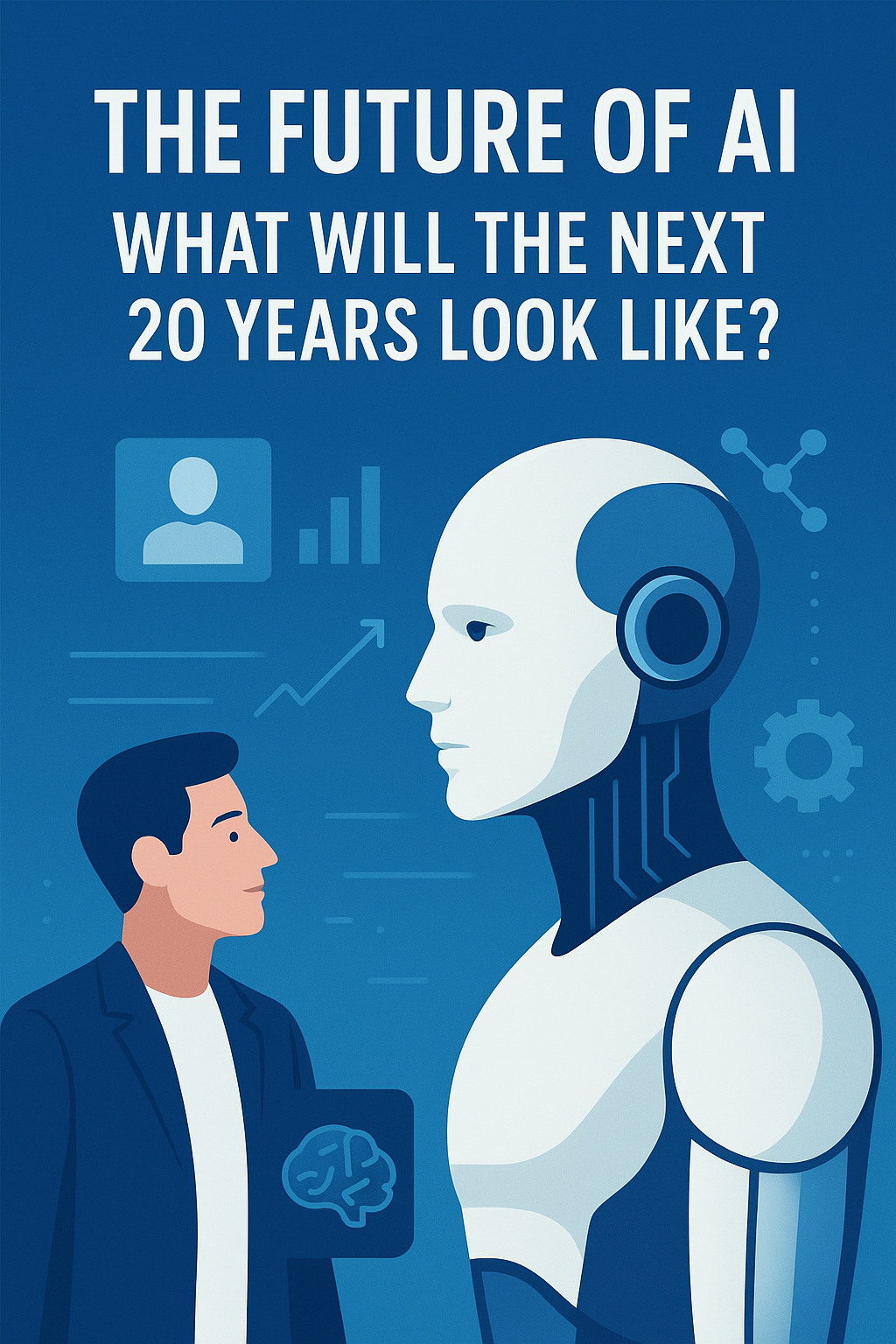
The Future of AI: What Will the Next 20 Years Look Like?
Artificial Intelligence has already become part of our daily lives—from smartphones and smart homes to healthcare and transportation. But what happens next? As we look ahead, the next 20 years promise even deeper integration between humans and machines. Rather than replacing us, AI is expected to evolve as a powerful partner that helps humanity solve complex problems and unlock new possibilities. Let’s explore what the future of AI may look like and how it could shape our world.
AI as a Daily Companion, Not a Replacement
In the coming decades, AI will move from being a tool we use occasionally to a constant companion that supports our decisions. Personal AI assistants may understand context, emotions, and long-term goals, helping us manage work, health, learning, and personal growth.
Instead of doing things for us, future AI will increasingly do things with us—enhancing human abilities while leaving creativity, empathy, and judgment firmly in human hands.
Smarter Healthcare and Longer, Healthier Lives
AI will play a major role in preventive medicine. By continuously analyzing data from wearable devices, medical records, and genetic information, AI systems could detect diseases years earlier than today.
Doctors will rely on AI for diagnosis support, personalized treatment plans, and robotic-assisted surgeries—while human expertise remains essential for decision-making, ethics, and patient care.
Education Tailored to Every Individual
In the next 20 years, education may no longer follow a one-size-fits-all model. AI tutors could adapt lessons in real time based on each student’s learning speed, interests, and strengths.
Lifelong learning will become the norm, with AI helping people reskill and adapt as industries evolve—making education more accessible and personalized than ever before.
Work Will Change, Not Disappear
While automation will replace some repetitive tasks, it will also create new roles we can’t fully imagine yet. Jobs of the future are likely to focus on creativity, problem-solving, strategy, and human interaction.
AI will handle data-heavy and routine work, allowing humans to focus on innovation and meaningful contributions. The challenge will be preparing people for this transition through education and responsible policies.
Ethics, Trust, and Responsible AI
As AI becomes more powerful, ethical questions will grow in importance. Who controls AI? How do we prevent bias? How do we protect privacy?
Over the next two decades, societies will need strong regulations, transparent AI systems, and global cooperation to ensure AI serves humanity fairly and responsibly.
Human and AI: A Shared Future
The future of AI is not about machines taking over—it’s about collaboration. If developed wisely, AI can help humanity address climate change, improve quality of life, expand knowledge, and explore beyond our planet.
The next 20 years will not be defined by what AI can do alone, but by how humans choose to work alongside it.
Final Thoughts
AI’s future is still being written—and humans are the authors. With curiosity, responsibility, and collaboration, the next two decades could mark one of the most transformative and hopeful periods in human history.
The future of AI is, ultimately, the future of us.
Synergy
Explore AI and creativity through engaging tutorials.
Innovate
Empower
contact@humanandai.net
© 2026. All rights reserved.