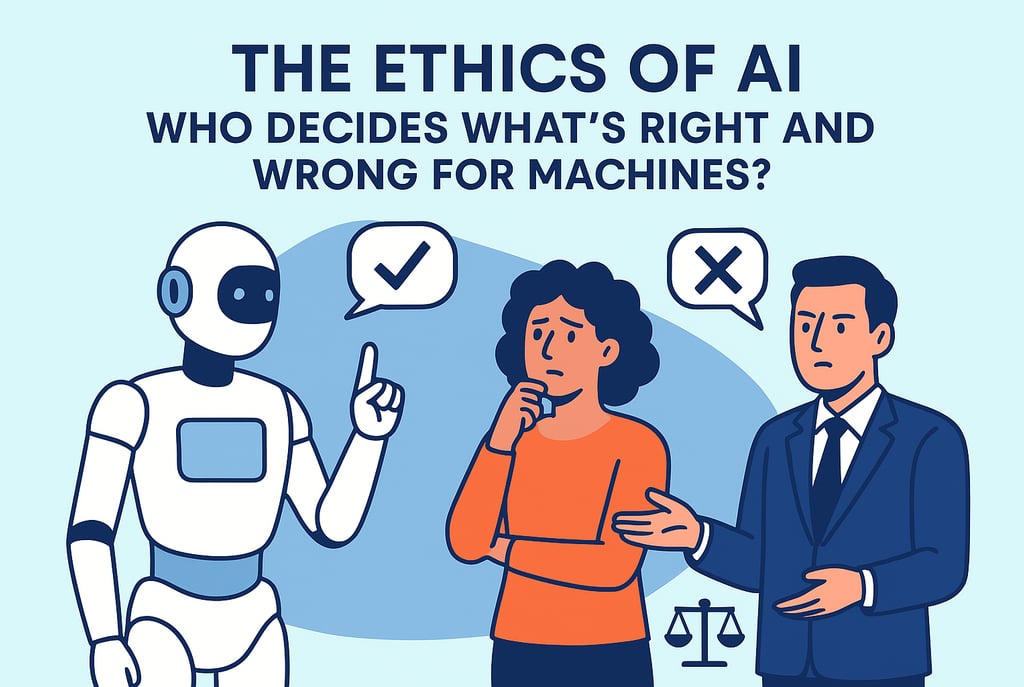
The Ethics of AI: Who Decides What’s Right and Wrong for Machines?
As AI becomes more powerful and more present in everyday life, an important question emerges: Who teaches machines what is right or wrong? This article explores the complex world of AI ethics, how decisions are made, and why human values must guide the future of intelligent systems.
The Ethics of AI: Who Decides What’s Right and Wrong for Machines?
Artificial Intelligence is already transforming our world — from medical diagnosis and self-driving cars to digital assistants and financial tools. But as AI systems become smarter, they also gain the ability to make decisions that can deeply affect people.
And that brings us to one of the most important questions of our time:
Who decides what ethical standards AI should follow?
Let’s explore how AI ethics works, who is responsible, and why these decisions matter for all of us.
Why AI Ethics Is So Important
AI doesn’t “think” or “feel” — it learns from data and patterns.
But data reflects human behavior, and humans are imperfect.
This means AI can:
Make unfair decisions
Reinforce stereotypes
Misinterpret actions or intentions
Influence society without accountability
Ethics is the guardrail that keeps technology from causing harm.
Who Shapes AI’s Morality?
AI doesn’t define its own values. People do. And not just one group — several actors play a role:
1. Engineers and Developers
They choose:
What data to train on
Which algorithms to use
What the system should prioritize (efficiency, fairness, safety, etc.)
But developers aren’t philosophers — and their decisions shape real-world outcomes.
2. Companies and Tech Leaders
Companies decide:
What features to release
What risks are acceptable
Whether profit or ethics comes first
This can create conflicts between innovation and responsibility.
3. Governments and Regulators
Laws define:
What AI can and cannot do
How personal data is used
When AI must be audited or controlled
Regulation is growing worldwide, but different countries have different values.
4. Society and Cultural Values
What is considered “right” differs between cultures.
For example:
Privacy expectations
Freedom of speech
Acceptable levels of surveillance
AI ethics must reflect a global reality, not just one country's perspective.
The Biggest Ethical Questions in AI
Here are some of the most important debates happening today:
● Bias and Fairness
How do we make sure AI treats everyone equally?
● Transparency
Should people know how AI makes decisions?
● Accountability
If an AI system makes a mistake, who is responsible?
● Autonomy
How much freedom should we give machines when making decisions?
● Surveillance vs. Safety
How do we balance security without violating privacy?
These are questions without simple answers — but they show how important ethical guidelines are.
Can AI Understand Morality?
Not in the human sense.
AI does not have:
Emotions
Intentions
A conscience
What it can do is follow rules and patterns that humans define.
Think of AI like a powerful tool:
It can do incredible good — or cause harm — depending on how we use it.
How We Build Ethical AI for the Future
To make sure AI benefits everyone, we need:
✔ Human oversight
People must always be in control of critical decisions.
✔ Clear laws and standards
Regulation ensures fairness, safety, and transparency.
✔ Diverse development teams
Different perspectives lead to better, more inclusive systems.
✔ Public awareness
Everyone should understand how AI works and how it affects daily life.
Conclusion: Ethics Is Not Optional — It’s Essential
AI is not just another technology.
It has the power to influence society, shape decisions, and impact lives.
That’s why the question “Who decides what’s right for machines?” matters so much.
The answer is: all of us.
Developers, companies, governments, and everyday people must work together to define the values we want AI to follow.
Because how we guide AI today will shape the world we live in tomorrow.
Synergy
Explore AI and creativity through engaging tutorials.
Innovate
Empower
contact@humanandai.net
© 2026. All rights reserved.