How AI Is Used in Everyday Apps (Updated)
Artificial Intelligence isn’t just powering robots or research labs anymore — it’s quietly shaping the apps we use every day. From messaging to fitness, AI works behind the scenes to make life smoother, smarter, and more personalized. The real question is: 👉 How exactly does AI improve the apps we rely on daily?
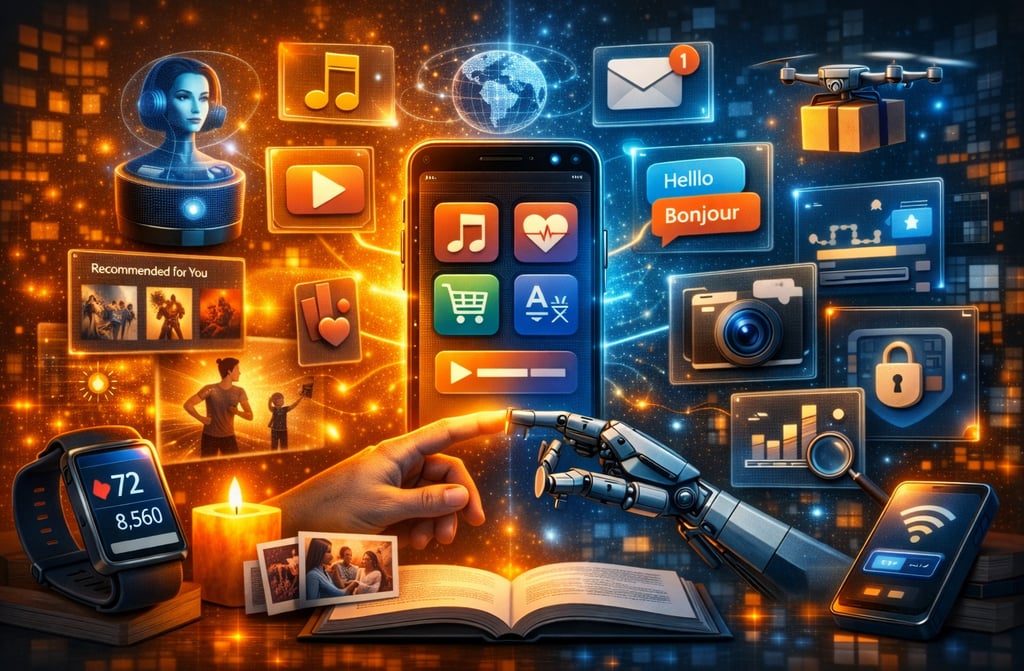

The Invisible Power of AI
Most people use AI without realizing it. It’s in your phone, your browser, your playlists, and even your calendar. AI doesn’t just automate — it learns from your behavior to anticipate what you need next.
Everyday Examples of AI in Apps
Smart Assistants Apps like Google Assistant, Siri, and Copilot use natural language processing to understand commands, answer questions, and perform tasks instantly.
Recommendation Systems Streaming platforms and shopping apps use AI to analyze your preferences and suggest movies, songs, or products you’ll likely enjoy.
Photo and Video Editing AI enhances images, removes backgrounds, and even generates creative effects automatically — turning complex editing into one‑tap magic.
Health and Fitness Tracking AI interprets sensor data to monitor sleep, heart rate, and activity levels, offering personalized insights and reminders for better wellness.
Language and Communication Translation apps and chat platforms use AI to break language barriers, detect tone, and even suggest replies that fit your style.
Security and Privacy AI detects unusual patterns to prevent fraud, spam, and unauthorized access — protecting users in real time.
Benefits of AI in Everyday Apps
Saves time through automation
Improves personalization
Enhances creativity and productivity
Strengthens security
Makes technology more intuitive
Limits and Challenges
Data Dependence — AI needs large amounts of data to learn effectively.
Bias Risks — algorithms can reflect human biases if not monitored.
Privacy Concerns — personalization often involves sensitive user data.
Over‑reliance — too much automation can reduce user awareness and control.
How to Use AI Apps Wisely
Review privacy settings regularly
Balance convenience with caution
Stay curious about how AI decisions are made
Use AI features to enhance, not replace, your judgment
Conclusion
AI has become the silent engine behind modern apps — learning, adapting, and improving every interaction. It’s not about replacing human intelligence but amplifying it. 👉 The smartest apps aren’t those that think for you — they’re the ones that help you think better.
Synergy
Explore AI and creativity through engaging tutorials.
Innovate
Empower
contact@humanandai.net
© 2026. All rights reserved.