How AI Helps IT Engineers Work Smarter
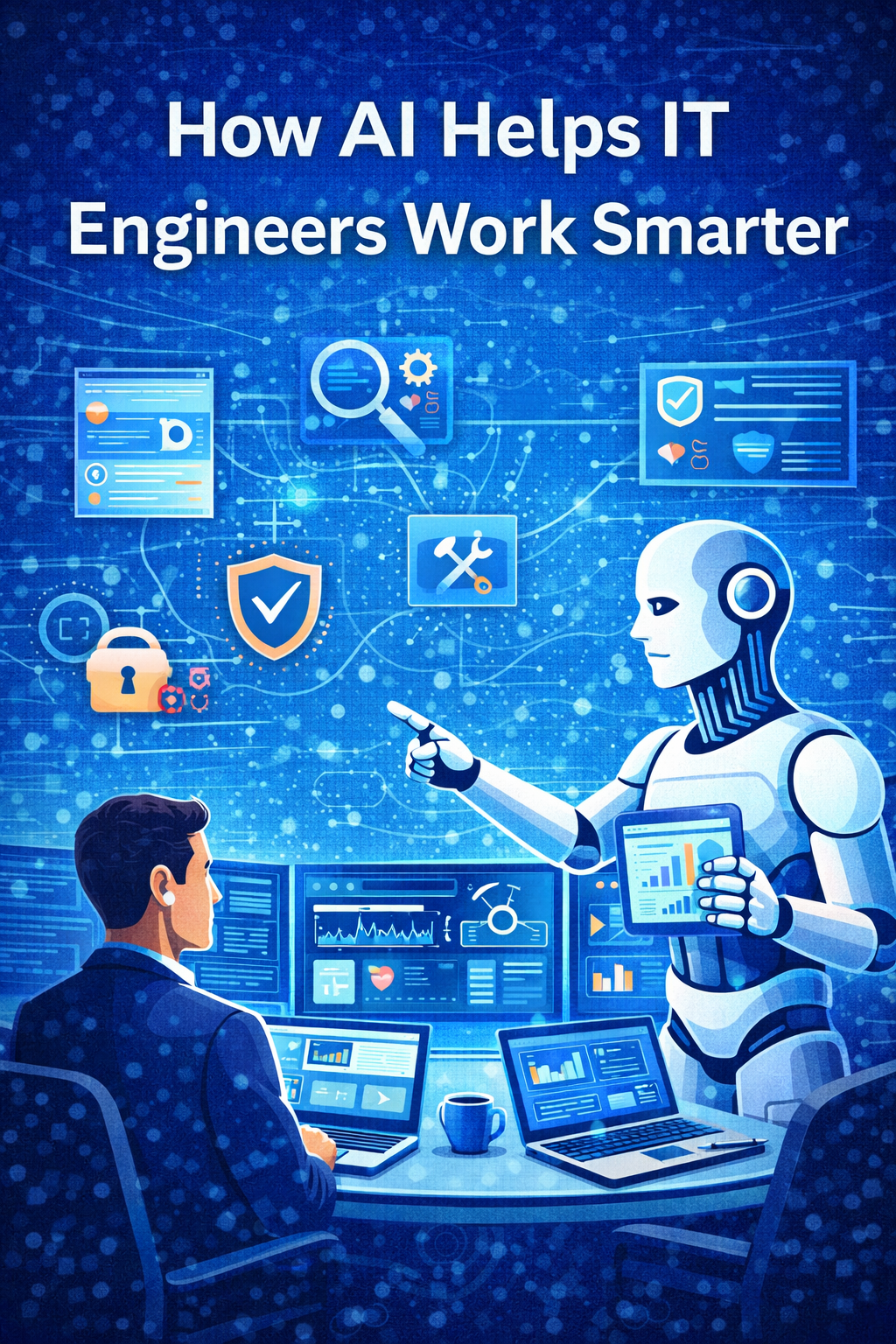
The work of IT engineers has always required deep technical knowledge, constant learning, and the ability to solve complex problems quickly. As modern infrastructures grow more complicated, managing systems, networks, security, and performance can become overwhelming. Artificial Intelligence is now helping IT professionals handle these challenges more efficiently. By automating repetitive tasks, analyzing large volumes of data, and providing intelligent insights, AI is allowing IT engineers to focus on what truly matters: designing better systems, improving performance, and solving critical problems. Let’s explore how AI is helping IT engineers work smarter in today’s digital world.
Automating Repetitive Tasks
Many IT tasks are repetitive and time-consuming.
Examples include:
Log analysis
System monitoring
Patch management
Routine maintenance checks
Basic troubleshooting
AI-powered tools can automatically perform many of these tasks.
For example, AI can analyze thousands of log entries in seconds and identify patterns that might indicate system issues. This reduces manual work and allows engineers to focus on higher-value tasks.
Automation is not about replacing engineers — it is about freeing their time.
Faster Problem Detection
One of the biggest challenges in IT operations is identifying problems quickly.
AI systems can continuously monitor infrastructure and detect anomalies such as:
Unusual network traffic
Performance drops
Hardware degradation
Unexpected system behavior
Because AI can analyze massive amounts of data in real time, it often identifies issues before users even notice them.
This proactive detection helps prevent outages and improves system reliability.
Smarter Troubleshooting
Troubleshooting complex systems can take hours or even days.
AI can assist by:
Correlating system events
Analyzing logs from multiple sources
Identifying possible root causes
Suggesting troubleshooting steps
Instead of manually searching through logs and alerts, engineers receive intelligent insights that help them solve problems faster.
This greatly reduces downtime and improves response times.
Improved Security Monitoring
Cybersecurity is one of the most critical areas in IT.
AI plays an important role in detecting security threats by analyzing behavior patterns across systems and networks.
AI can help detect:
Suspicious login attempts
Malware activity
Unusual network connections
Insider threats
Data exfiltration attempts
Because AI continuously learns from patterns, it can detect threats that traditional rule-based systems may miss.
This provides an additional layer of protection for organizations.
Better Infrastructure Optimization
AI can also help optimize IT infrastructure performance.
By analyzing system performance over time, AI tools can:
Recommend hardware upgrades
Identify inefficient resource usage
Predict capacity requirements
Optimize cloud resource allocation
This allows organizations to reduce costs while maintaining strong performance.
IT engineers can make more informed decisions based on data rather than guesswork.
AI as a Learning Assistant
Another powerful benefit of AI is its role as a learning companion for IT professionals.
Engineers can use AI tools to:
Explain technical concepts
Generate configuration examples
Suggest troubleshooting strategies
Explore new technologies
Instead of spending hours searching through documentation, engineers can quickly get explanations and guidance.
This helps professionals learn faster and adapt to new technologies more easily.
Human Expertise Still Matters
Despite its capabilities, AI cannot replace the experience and judgment of IT engineers.
Engineers are still responsible for:
Designing system architecture
Making strategic decisions
Evaluating risks
Understanding business requirements
Applying creative problem solving
AI provides insights and automation, but human expertise remains essential.
The best results come from collaboration between human intelligence and artificial intelligence.
The Future of AI in IT Operations
As AI technology continues to improve, IT operations will become even more intelligent.
In the future we may see:
Self-healing infrastructure
Fully automated monitoring systems
AI-driven cybersecurity defense
Autonomous network optimization
These advancements will not eliminate the role of IT engineers. Instead, they will allow professionals to focus on innovation and strategic development.
Conclusion
Artificial Intelligence is transforming the way IT engineers manage systems, networks, and infrastructure.
By automating repetitive tasks, detecting issues early, and providing intelligent insights, AI allows engineers to work faster, smarter, and more efficiently.
Rather than replacing IT professionals, AI acts as a powerful assistant that enhances their capabilities.
In the modern IT environment, the most successful engineers will be those who know how to combine technical expertise with the power of AI tools.
Synergy
Explore AI and creativity through engaging tutorials.
Innovate
Empower
contact@humanandai.net
© 2026. All rights reserved.