AI in Disaster Response: How Artificial Intelligence Helps Save Lives During Crises
When disaster strikes, every second counts. Whether it’s an earthquake, flood, wildfire, or hurricane, the ability to respond quickly can mean the difference between life and death. Artificial Intelligence (AI) is transforming how we predict, prepare for, and respond to disasters — helping first responders and organizations save lives more effectively than ever before.
The Role of AI in Predicting Disasters
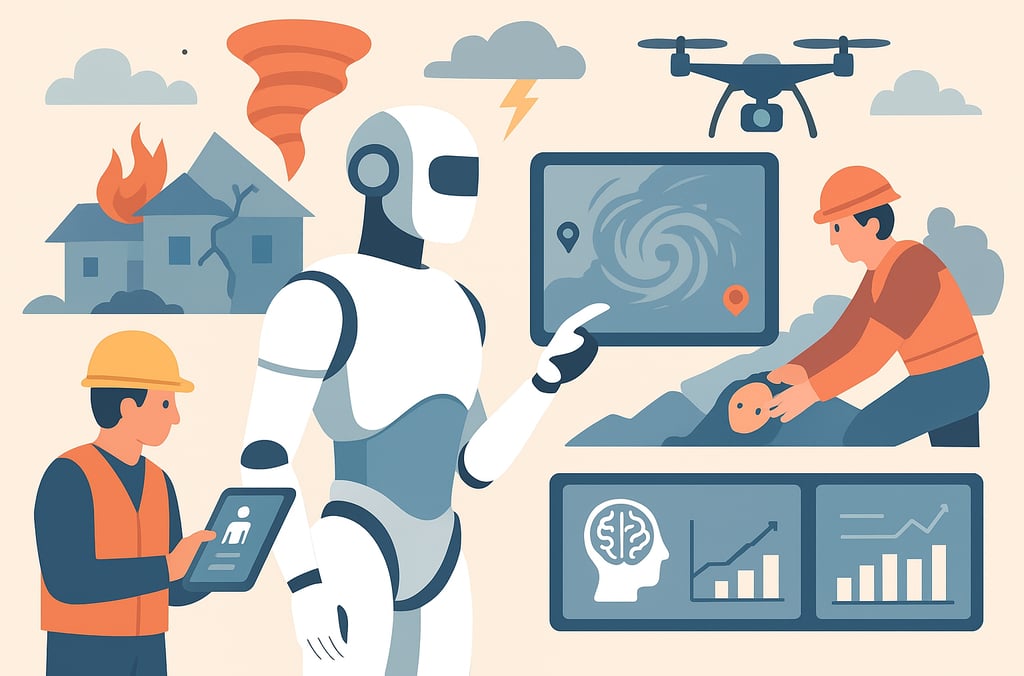
AI can analyze massive amounts of data from satellites, sensors, weather reports, and social media to detect warning signs before a disaster even happens.
For example:
AI models predict hurricanes by analyzing wind patterns and sea temperatures.
Earthquake early warning systems use AI to detect seismic activity and send alerts within seconds.
Flood prediction algorithms monitor rainfall, soil saturation, and river flow to anticipate flash floods.
By identifying risks in advance, authorities can issue warnings earlier and help communities prepare before it’s too late.
AI in Real-Time Disaster Response
When disasters occur, AI tools provide critical real-time support:
Drone imagery and computer vision help locate survivors trapped under debris.
AI-powered communication tools analyze emergency calls and social media posts to identify the most affected areas.
Smart logistics systems help responders deliver medical supplies and food where they are needed most efficiently.
This instant insight gives rescuers a clearer picture of the situation, helping them prioritize resources and save more lives.
AI for Recovery and Rebuilding
Even after the immediate crisis ends, AI continues to play a vital role in rebuilding.
Damage assessment algorithms analyze satellite images to estimate destruction and recovery costs.
Predictive analytics help plan reconstruction by identifying the safest and most sustainable rebuilding strategies.
AI-driven data systems assist humanitarian organizations in managing donations and tracking assistance to affected communities.
AI ensures that recovery efforts are data-driven, efficient, and equitable.
Ethical and Practical Challenges
Despite its benefits, using AI in disaster response raises important ethical questions. Data privacy, algorithmic bias, and reliance on technology in low-connectivity areas can complicate response efforts. Ensuring transparency, fairness, and accessibility remains essential to making AI a trustworthy ally in emergencies.
Conclusion
Artificial Intelligence is not replacing human compassion or courage — it’s empowering it.
By combining the speed and precision of AI with human intuition and empathy, we can respond to disasters faster, smarter, and with greater care. AI gives humanity a powerful new tool to protect what matters most — life itself.
Synergy
Explore AI and creativity through engaging tutorials.
Innovate
Empower
contact@humanandai.net
© 2026. All rights reserved.