AI and Robotics: Where We Are Heading
Introduction Robots have long been a symbol of the future. From science fiction movies to real-world factories, they have evolved from simple machines into increasingly intelligent systems. Today, the combination of Artificial Intelligence and robotics is accelerating this transformation. AI is giving robots the ability to learn, adapt, and make decisions — moving them beyond fixed programming into a new era of intelligent automation. So where are we heading? Let’s explore the future of AI-powered robotics.
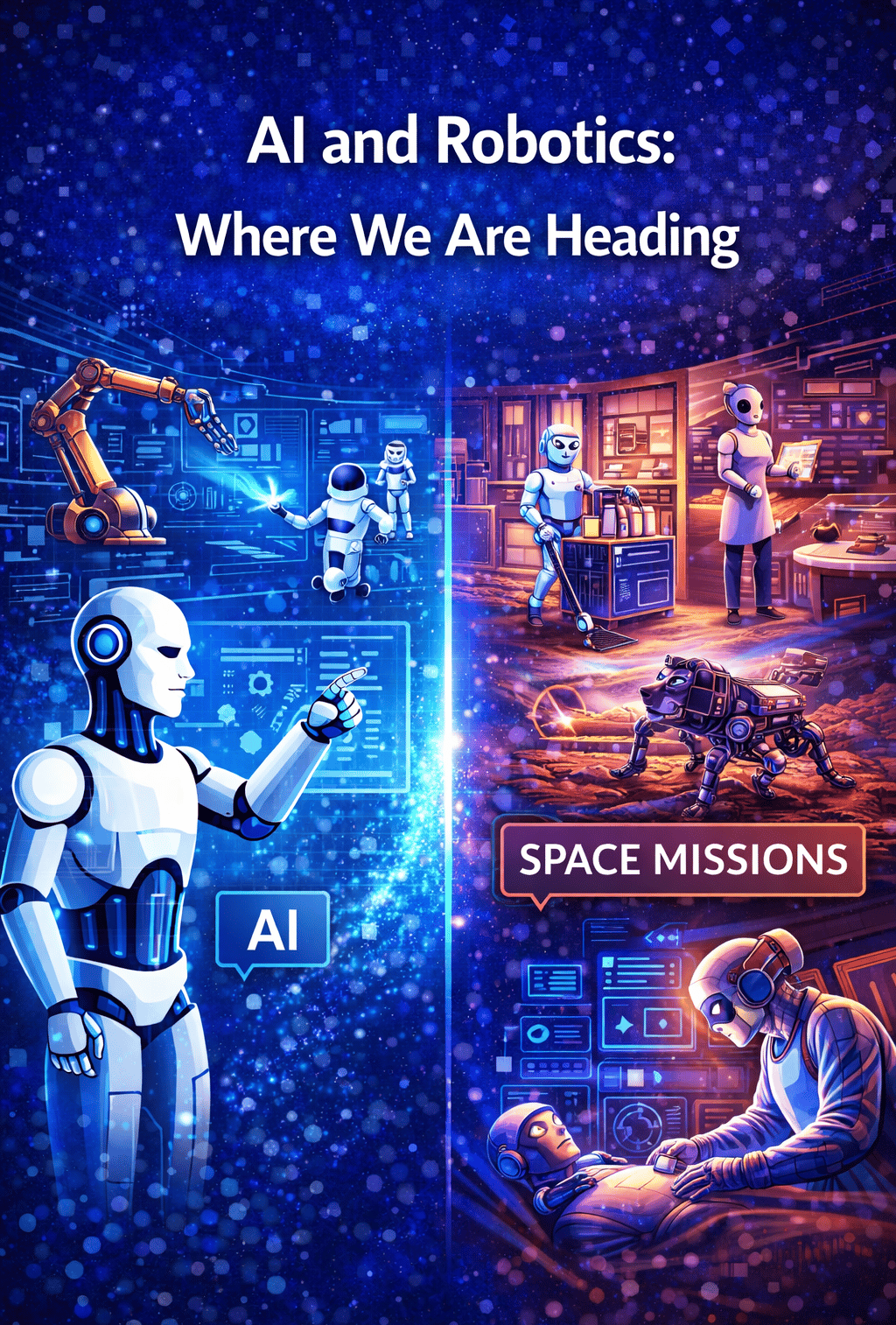
From Simple Machines to Intelligent Systems
Traditional robots were designed to perform repetitive tasks.
They could:
Follow predefined instructions
Repeat the same movement
Operate in controlled environments
But they could not:
Adapt to changes
Learn from experience
Make decisions
AI is changing that.
How AI Is Transforming Robotics
With AI integration, robots are becoming more capable and flexible.
✅ 1. Learning and Adaptation
AI allows robots to:
Learn from data
Improve performance over time
Adapt to new situations
This is a major step beyond traditional automation.
✅ 2. Computer Vision
AI-powered vision systems enable robots to:
Recognize objects
Navigate environments
Identify defects
Interact with surroundings
This is essential in industries like manufacturing, logistics, and healthcare.
✅ 3. Decision-Making
Modern robots can now:
Analyze situations
Choose actions
Respond dynamically
This allows them to operate in less predictable environments.
✅ 4. Human-Robot Collaboration
AI enables robots to work alongside humans, not just separately.
These collaborative robots (cobots) can:
Assist workers
Improve safety
Increase productivity
This is already happening in many industries.
Where We See AI Robotics Today
AI-powered robots are already used in:
Manufacturing – assembly lines, quality control
Healthcare – surgical assistance, rehabilitation
Logistics – warehouse automation
Retail – inventory management
Security – surveillance and monitoring
These are practical, real-world applications — not science fiction.
What’s Coming Next
The future of AI and robotics is even more exciting.
🚀 1. More Autonomous Robots
Robots will require less human control and operate more independently.
🚀 2. Smarter Home Robots
From cleaning to personal assistance, home robots will become more useful and intelligent.
🚀 3. Advanced Industrial Automation
Factories will become more flexible, with robots adapting to different tasks in real time.
🚀 4. AI-Powered Service Robots
We may see robots in:
Hotels
Airports
Customer service roles
🚀 5. Exploration and Extreme Environments
Robots will be used in:
Space missions
Deep-sea exploration
Hazardous environments
Challenges and Concerns
Despite progress, there are still important challenges.
High development costs
Safety concerns
Ethical questions
Job impact fears
Technical limitations
AI-powered robots must be designed responsibly and carefully integrated into society.
Will Robots Replace Humans?
This is a common concern.
The reality is more balanced.
Robots are best at:
Repetitive tasks
Precision work
Operating in dangerous environments
Humans are best at:
Creativity
Complex decision-making
Emotional intelligence
Strategic thinking
The future is not replacement — it is collaboration.
The Role of Humans in an AI-Robotic World
As robotics evolves, human roles will shift.
People will focus more on:
Designing systems
Managing automation
Solving complex problems
Innovating new technologies
AI and robotics will enhance human capabilities, not eliminate them.
Conclusion
The combination of AI and robotics is shaping the future of technology.
From factories to homes and even space, intelligent robots are becoming part of our daily lives.
While challenges remain, the direction is clear:
👉 Robots are becoming smarter
👉 Systems are becoming more autonomous
👉 Humans and machines are working closer than ever
The future is not about humans vs robots.
It is about building a world where both work together to achieve more than ever before.
Synergy
Explore AI and creativity through engaging tutorials.
Innovate
Empower
contact@humanandai.net
© 2026. All rights reserved.