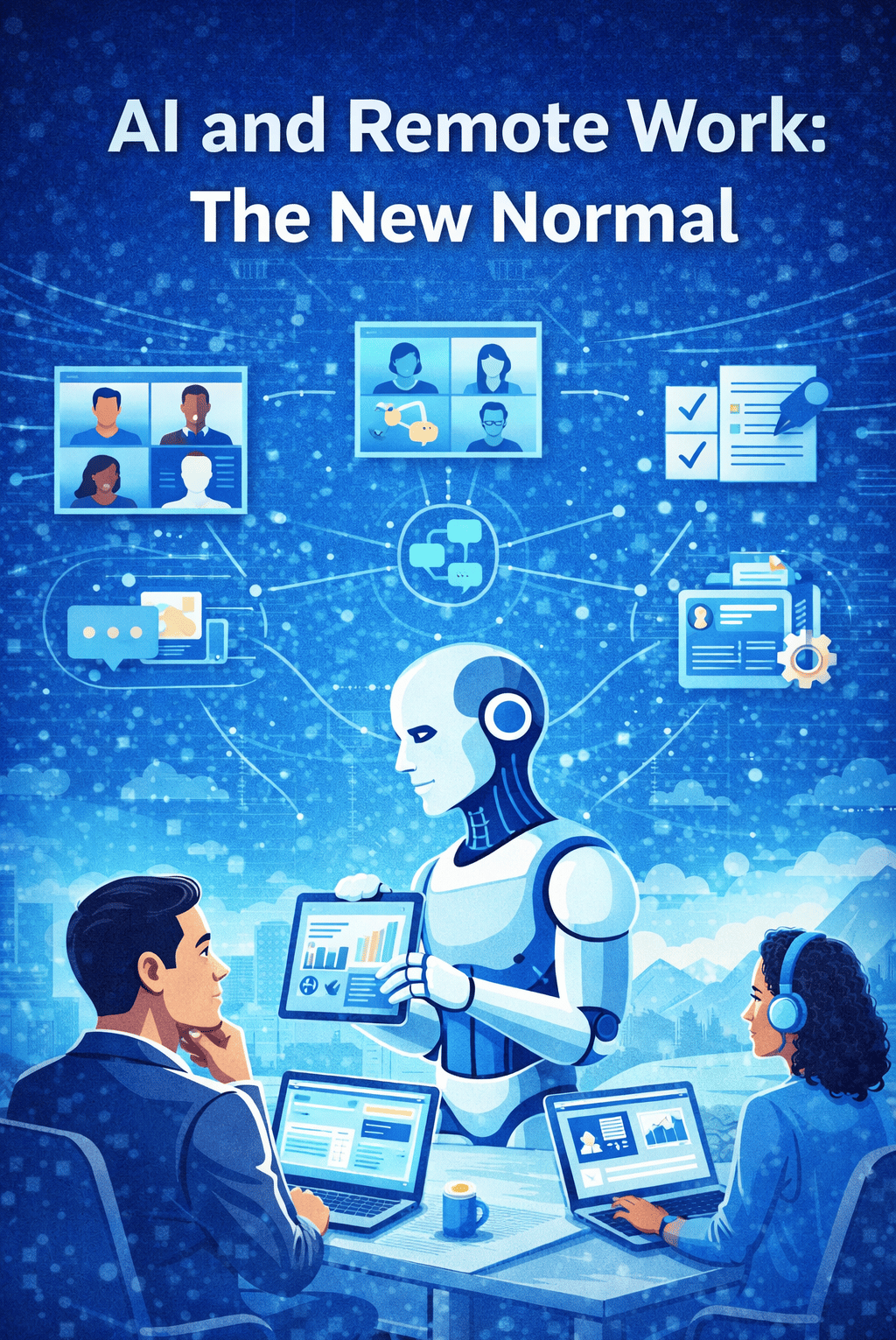
AI and Remote Work: The New Normal
Remote work was once considered a temporary solution or a luxury offered by only a few companies. Today, it has become a normal part of professional life. Millions of people now work from home, co-working spaces, or even while traveling. Artificial Intelligence is playing a major role in making this shift possible. From virtual meetings and task management to smart assistants and automated workflows, AI is helping remote teams stay productive, organized, and connected no matter where they are. Let’s explore how AI is shaping the future of remote work.
How Remote Work Has Evolved
Before modern digital tools, working remotely was difficult. Communication was slower, collaboration was harder, and managing projects across locations was complicated.
Today, technology has transformed this experience.
With the help of AI-powered tools, remote workers can:
Communicate instantly with teammates
Organize projects and tasks efficiently
Access information quickly
Automate repetitive work
Maintain productivity from anywhere
AI acts as a digital assistant that helps keep everything running smoothly.
AI-Powered Productivity
One of the biggest benefits of AI in remote work is increased productivity.
AI tools can help professionals:
Summarize meetings automatically
Generate reports and documents
Organize emails and messages
Suggest task priorities
Manage schedules
This allows remote workers to spend less time on administrative tasks and more time focusing on meaningful work.
Smarter Collaboration Across Distances
Working remotely often means collaborating with colleagues across cities, countries, or even continents.
AI helps bridge the gap by improving communication.
Examples include:
Real-time translation during meetings
AI-generated meeting notes
Smart scheduling across time zones
Automatic transcription of conversations
These tools reduce misunderstandings and make teamwork easier.
Better Work-Life Balance
Remote work can offer flexibility, but it also comes with challenges such as blurred boundaries between work and personal life.
AI tools can help manage this balance by:
Tracking productivity patterns
Suggesting optimal working hours
Organizing tasks based on priority
Reducing overload through automation
By helping professionals work smarter rather than longer, AI can support healthier work habits.
Challenges of AI in Remote Work
Despite its benefits, AI-powered remote work also brings new concerns.
Some of these include:
Over-reliance on digital tools
Monitoring and privacy concerns
Reduced face-to-face interaction
The risk of digital burnout
Organizations must use AI responsibly and focus on supporting employees rather than controlling them.
New Skills for the Remote Workforce
As AI becomes more integrated into remote work environments, professionals need to develop new skills.
Important abilities include:
Digital communication skills
AI literacy
Self-management and discipline
Critical thinking when using AI tools
Adaptability to new technologies
The most successful remote workers are those who can combine human creativity with technological support.
AI Is Creating a Global Workforce
One of the most exciting outcomes of remote work is the rise of the global workforce.
AI-powered tools make it easier than ever for companies to collaborate with talent from anywhere in the world.
This means:
More opportunities for professionals
Greater diversity in teams
Access to global knowledge and perspectives
AI helps remove geographical barriers and connect people across cultures.
The Future of Remote Work
Remote work is not just a temporary trend. It is becoming a permanent part of modern work culture.
In the future, we will likely see:
Smarter AI assistants for daily tasks
Virtual AI-powered workspaces
Better collaboration tools
More flexible work environments
Increased global cooperation
AI will continue to shape how and where we work.
Conclusion
AI is helping transform remote work from a temporary solution into a powerful new way of working.
By automating routine tasks, improving collaboration, and supporting productivity, AI allows professionals to work effectively from almost anywhere.
However, the key to success is balance.
Technology should support human creativity, communication, and decision-making — not replace them.
The future of work is not just remote.
It is smart, flexible, and powered by the collaboration between humans and AI.
Synergy
Explore AI and creativity through engaging tutorials.
Innovate
Empower
contact@humanandai.net
© 2026. All rights reserved.