AI and Language: Breaking Down Barriers with Real-Time Translation
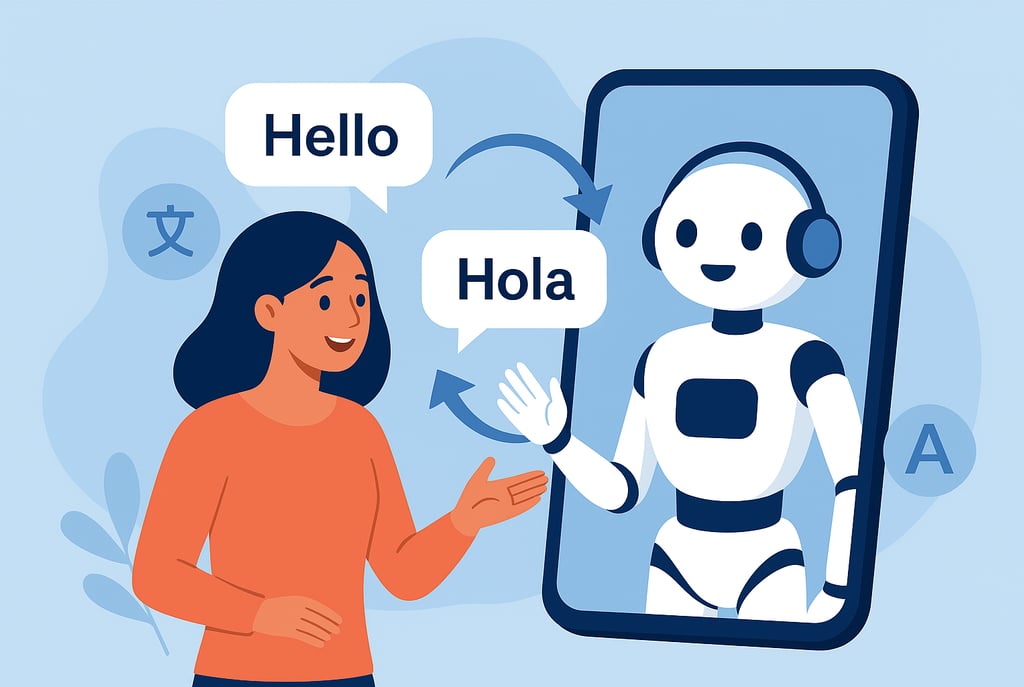
Artificial Intelligence is transforming the way humans communicate. Real-time translation is no longer science fiction — it’s becoming an everyday tool that connects people from different cultures and languages. Here’s how AI is breaking down communication walls and shaping a more connected world.
AI and Language: Breaking Down Barriers with Real-Time Translation
Communication is at the heart of human connection. For centuries, language differences have created barriers — limiting collaboration, slowing travel, and even causing misunderstandings. But today, Artificial Intelligence is changing everything. With real-time translation, people can finally speak freely across languages, almost as if everyone shared the same native tongue.
AI isn’t just translating; it’s bringing the world closer together.
How Real-Time AI Translation Works
Modern AI translation systems use advanced neural networks trained on billions of words from many languages. This allows them to:
Recognize speech in real time
Understand meaning, not just words
Translate naturally, considering context and tone
Speak or display the translated output instantly
It’s fast, accurate, and improving constantly.
Thanks to this technology, you can now talk to someone who speaks Japanese, Spanish, or Arabic without needing to know a single word in their language.
Examples of Real-Time Translation in Action
1. Smartphones with Built-In Translators
Apps like Google Translate, Apple Translate, and ChatGPT’s own voice mode allow users to have full conversations across languages.
2. AI-Powered Earbuds
Real-time translation earbuds let travelers speak and listen as if subtitles were playing in their ears.
3. Cross-Border Business
Companies communicate with international partners effortlessly, speeding up negotiations and reducing misunderstandings.
4. Online Meetings
AI tools translate video calls live — perfect for global teams.
Why AI Translation Matters
Breaking Cultural Barriers
People can now connect with others from different cultures without fear of miscommunication.
Helping Travelers
Trip abroad? AI can help you order food, ask for directions, or chat with locals — in seconds.
Supporting Education
Students can study content in any language, expanding access to global knowledge.
Boosting Global Collaboration
Teams from different countries can create, build, and innovate together like never before.
The Challenges AI Still Faces
Even with huge progress, AI translation isn’t perfect. Some difficulties include:
Idioms and slang (“break a leg,” “piece of cake,” etc.)
Cultural references that don’t exist in other languages
Emotional tone that can shift meaning
Specialized technical language
AI is improving, but human translators still play an important role in complex or sensitive conversations.
A Future with No Language Barriers
Imagine a world where:
Any movie, game, or book is instantly available in your native language
International friendships feel natural
Businesses collaborate globally without friction
Emergencies are handled faster because responders understand each other
Every traveler feels confident anywhere in the world
This future is already beginning. AI is unlocking a world where communication is universal.
Conclusion
AI-powered translation is more than a tech innovation — it’s a bridge between cultures. By helping us understand one another in real time, AI builds connection, empathy, and global cooperation.
Language barriers are fading. And with AI, the world feels a little smaller — and much closer.
Synergy
Explore AI and creativity through engaging tutorials.
Innovate
Empower
contact@humanandai.net
© 2026. All rights reserved.