AI and Human Relationships: Can Technology Improve How We Connect?
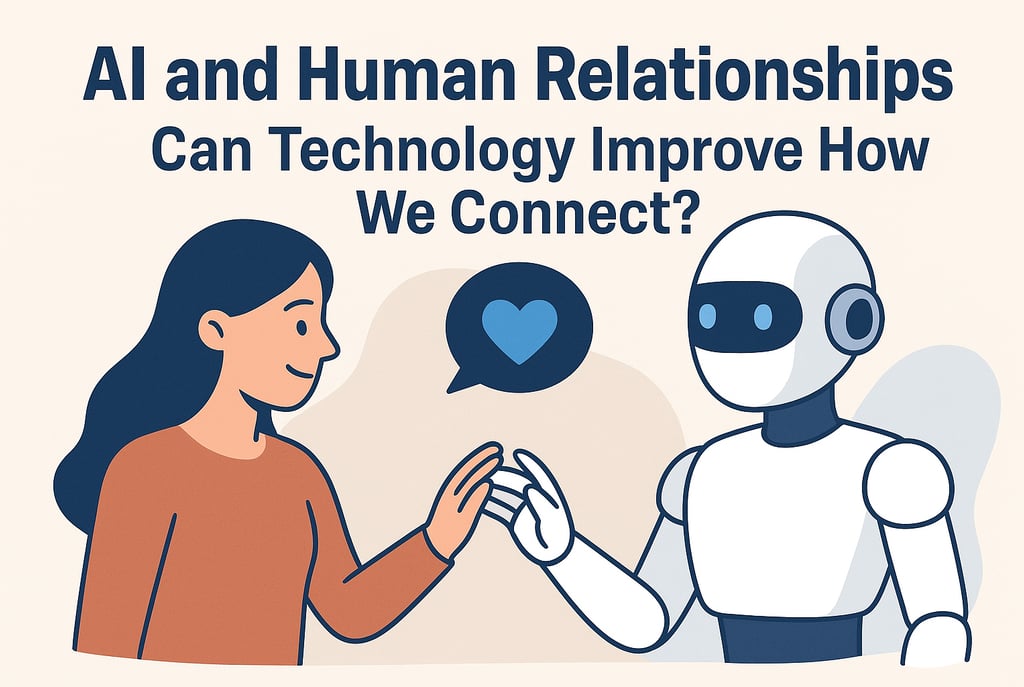
Human relationships are at the heart of everything we do — at home, at work, and in society. But as technology becomes more deeply embedded in our lives, a big question emerges: Can AI actually help us connect better? While some people fear that machines might replace human bonds, the reality is that AI, when used responsibly, can strengthen communication, build understanding, and support healthier relationships.

AI as a Tool for Better Communication
Communication is often where relationships succeed — or struggle. AI-powered tools can help bridge gaps that humans sometimes struggle to close on their own.
Real-time translation helps people from different cultures connect without language barriers.
Emotion recognition systems can assist in identifying stress, frustration, or sadness that someone may not openly express.
AI writing assistants help people communicate more clearly, whether in personal messages or professional contexts.
AI doesn’t replace the emotion behind our words — it simply helps deliver them with greater clarity and understanding.
Strengthening Long-Distance Connections
Long-distance relationships — whether romantic, family-based, or friendships — can be challenging. AI-based technologies can help make these connections feel more natural and consistent.
Examples include:
AI-enhanced video calls that optimize lighting, audio, and expression clarity.
Virtual shared activities, such as watching movies together with synchronized playback.
AI memory assistants that help remember important dates, conversations, and shared plans.
Technology becomes a bridge, not a barrier.
AI as a Support Tool in Emotional and Mental Well-Being
AI can help individuals better understand themselves — a vital element of any healthy relationship.
Chatbots and AI companions can offer emotional support during difficult moments.
Mental-health AI apps can track mood patterns, sleep, stress, and offer personalized recommendations.
Conflict-resolution AI tools can guide couples or teams through disagreements by identifying patterns and suggesting communication strategies.
These tools do not replace human love, compassion, or empathy — they enhance our ability to connect with one another.
AI in Social Skills Development
Some people struggle with communication, social cues, or emotional expression. AI can help:
Teaching social skills to children and adults.
Assisting people on the autism spectrum with facial-expression recognition.
Offering personalized feedback to improve clarity and confidence during conversations.
AI can empower people to participate more fully in the world around them.
The Concerns — and the Balance
It’s important to acknowledge the challenges:
Over-reliance on technology can distance people if not used intentionally.
AI should never replace real human relationships.
Privacy and emotional data must be handled with extreme care.
But when AI is viewed as a tool — not a substitute — it becomes a powerful ally in improving the way we relate to one another.
Conclusion
AI will not replace love, friendship, or human connection. But it can support them.
It can help us communicate better, understand each other more deeply, and form stronger, healthier relationships.
Technology doesn’t break human connection — it enhances it, when guided by empathy and intention.
Synergy
Explore AI and creativity through engaging tutorials.
Innovate
Empower
contact@humanandai.net
© 2026. All rights reserved.